


 PAL System
 LC Column Finder
 Reference Standards
 Outlet
How to Use Ion Selective Electrodes
Select a step to open the corresponding section.
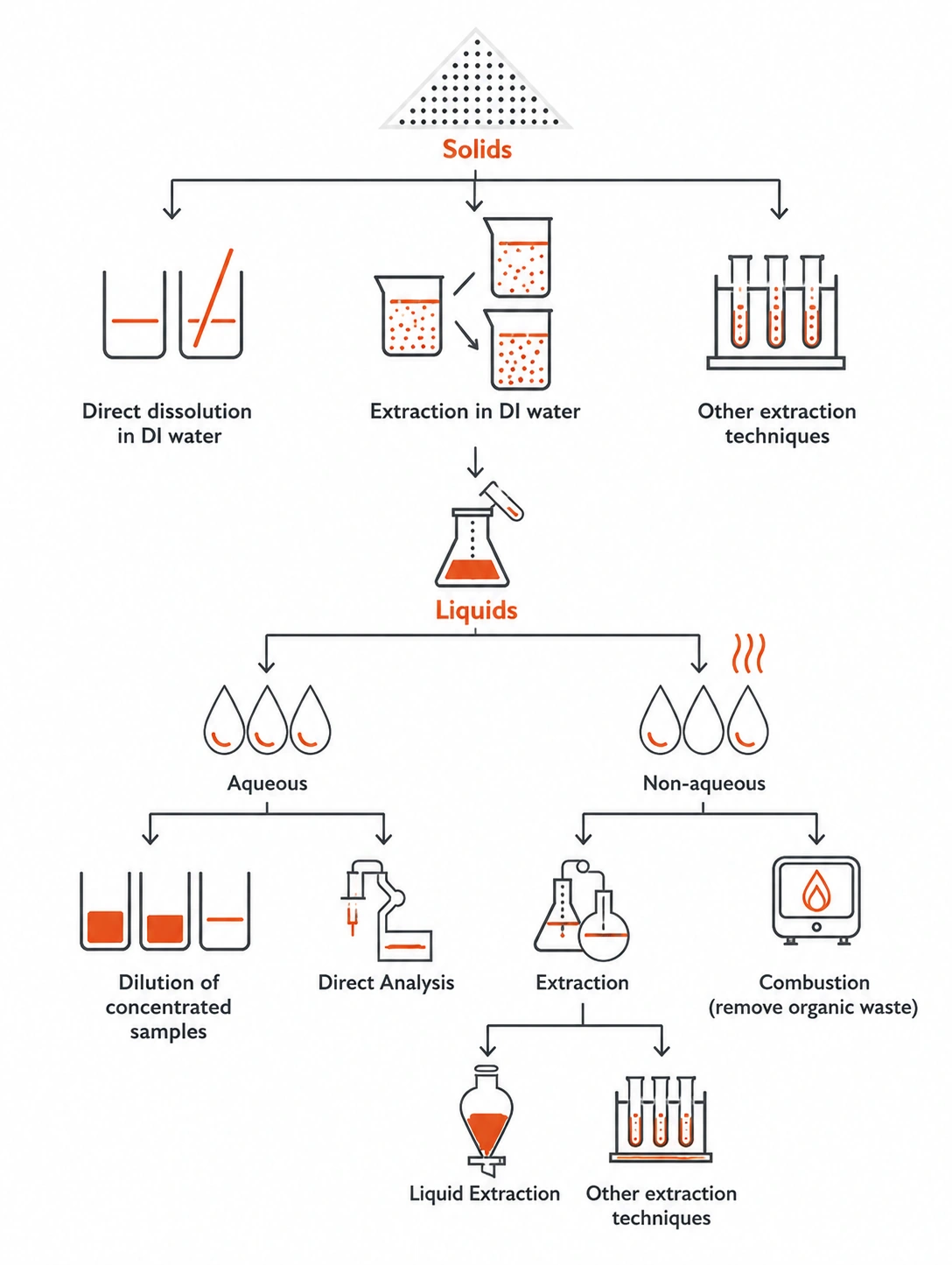
Dissolution:
- ISE measurements are carried out on liquid samples. Solid samples must, therefore, be converted into a liquid state for analysis using ISEs. Deionized (DI) water is necessary for sample dissolution and extraction to minimize interfering ions.
- In cases where dissolving the analyte is not feasible, consider alternative techniques like selective extraction of the analyte ion using a suitable solvent.
Concentration Adjustment:
- The typical working range for ISEs is 0.1 - 1000 ppm.
- The amount of sample required will depend on the expected concentration of the analyte.
- Very dilute samples may require concentration techniques, while highly concentrated samples might need dilution with DI water to fall within this range.
Interference Removal:
- The presence of interfering substances in the sample can affect the ISE's response to the target analyte.
- If interferences are suspected, explore options like selective extraction of the analyte ion or the use of masking agents to eliminate their effects.
Ionic Strength Adjustment (ISA):
- ISE measurements rely on a constant ionic background to ensure a consistent response.
- Add ISA solutions to both samples and calibration standards to achieve this uniform ionic strength.
Standardization:
- For accurate calibration, maintain uniform conditions of temperature and stirring for both the sample and standard solutions during measurement.
- For ISE measurements, use at least two calibration standards bracketing the expected sample concentration.
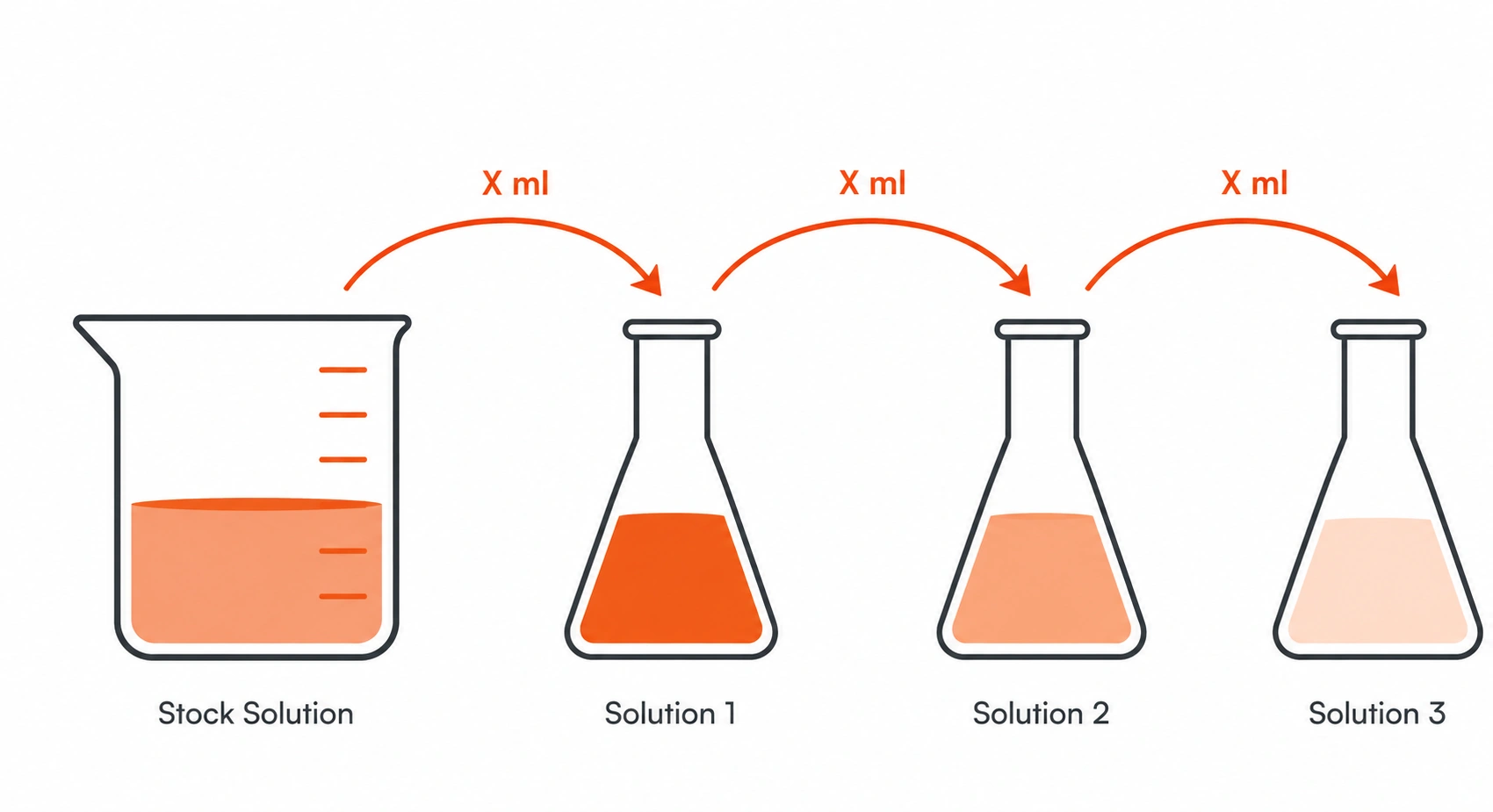
- Prepare the required concentrations with a serial dilution.
- Serial dilution means that an initial standard is diluted using volumetric glassware to prepare a second standard solution. The second standard is similarly diluted to prepare a third standard, and so on.
- Verify the electrode calibration every two hours by placing the electrode in a fresh aliquot of the least concentrated standard used for calibration.
- Recalibrate the electrode when the following deviation occurs:
- Solid state membrane ISE: the value has changed by more than 2%.
- Polymer membrane ISE: the value has changed by more than 4%.
Ion Selective Electrode
- Fill the electrode with the correct electrolyte.
- The filling level must be higher than the sample level.
- Soak for 10–15 minutes in a low-concentration standard solution.
- Condition by soaking overnight if using after a long time – Dry storage. Before the measurements, keep ISE for 15 minutes in deionized water.
- For more details on conditioning, please refer to the operating instructions of the respective ISE.
Reference Electrode
- Fill the reference electrode with electrolyte according to the operating instructions.
- The filling level must be higher than the sample level.
- The electrolyte filling hole must be open during measurements.
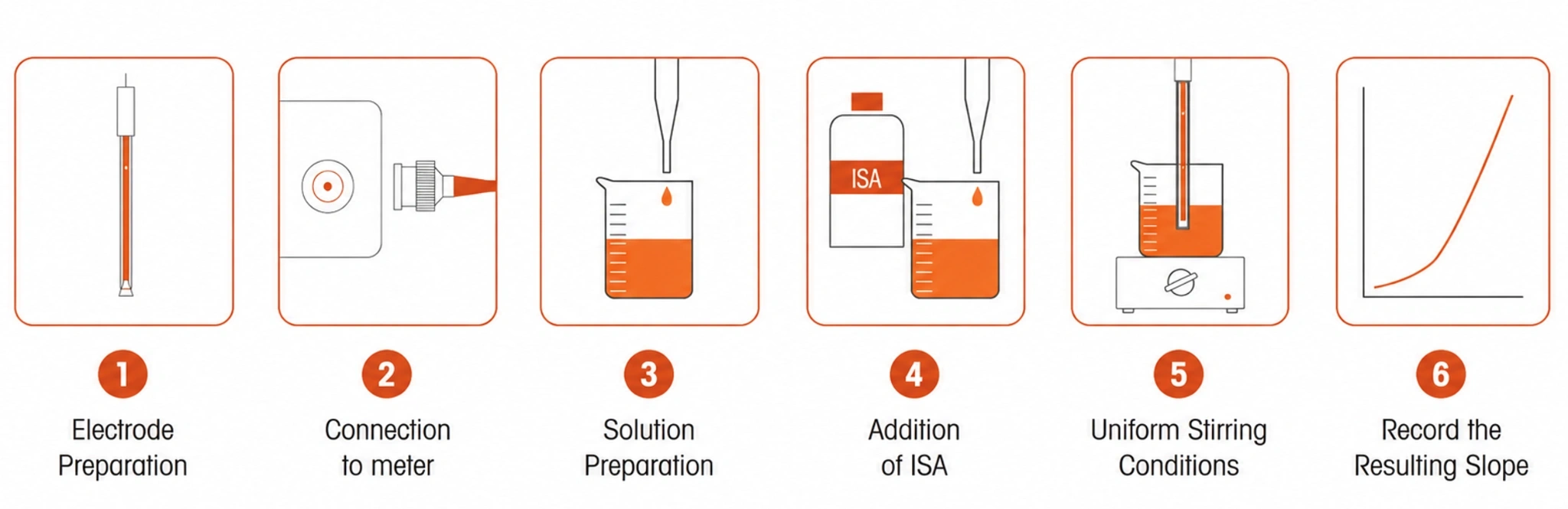
- Select the preferred unit (mol/L, mg/L, ppm, etc.).
- Select the appropriate ion method and define the sensor ID.
- Rinse the ISE with deionized water and blot dry.
- Connect the ISE to the meter.
- Select at least two calibration standards that bracket the expected sample concentration.
- Add ISA to the first calibration standard.
- Place the electrode into the first standard.
- Stir at a moderate, consistent rate.
- Ensure the sensing part of the electrode is fully immersed.
- Avoid air bubbles on the sensing part.
- Perform the calibration and wait for the measurement to stabilize.
- Rinse the electrode with deionized water and blot dry.
- Repeat the steps for the remaining calibration standards.
- Record the slope resulting from the calibration. For more details, refer to “Understanding Slope” in the following article.
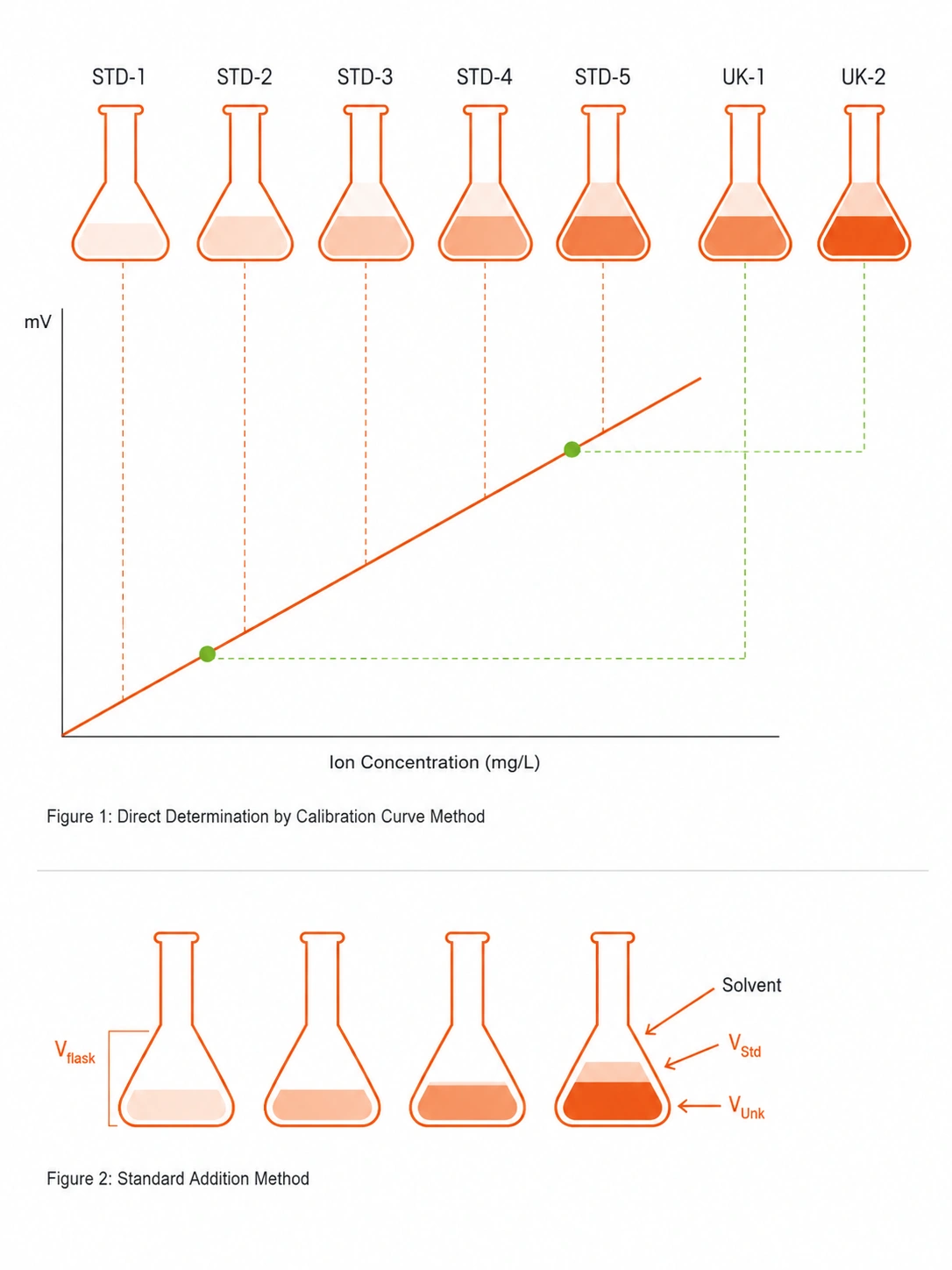
Direct Determination
- After calibrating the sensor with standard solutions, the calibration curve can be plotted, and the sample measured.
Standard Addition
- Constant volume of unknown + increased volume of standard(s) in the flask (one or multiple addition).
- Constant volume of standard + increased volume of unknown (one or multiple addition).
- When one – single standard addition.
- When many – multiple standard addition.
- Increment size is selected to achieve an electrode potential of:
- 30 mV for monovalent ions
- 10 mV for bivalent ions
- Based on the volumes of sample, the volume of standard used, the concentration of standard, and the slope of ISE, the sample concentration is determined.
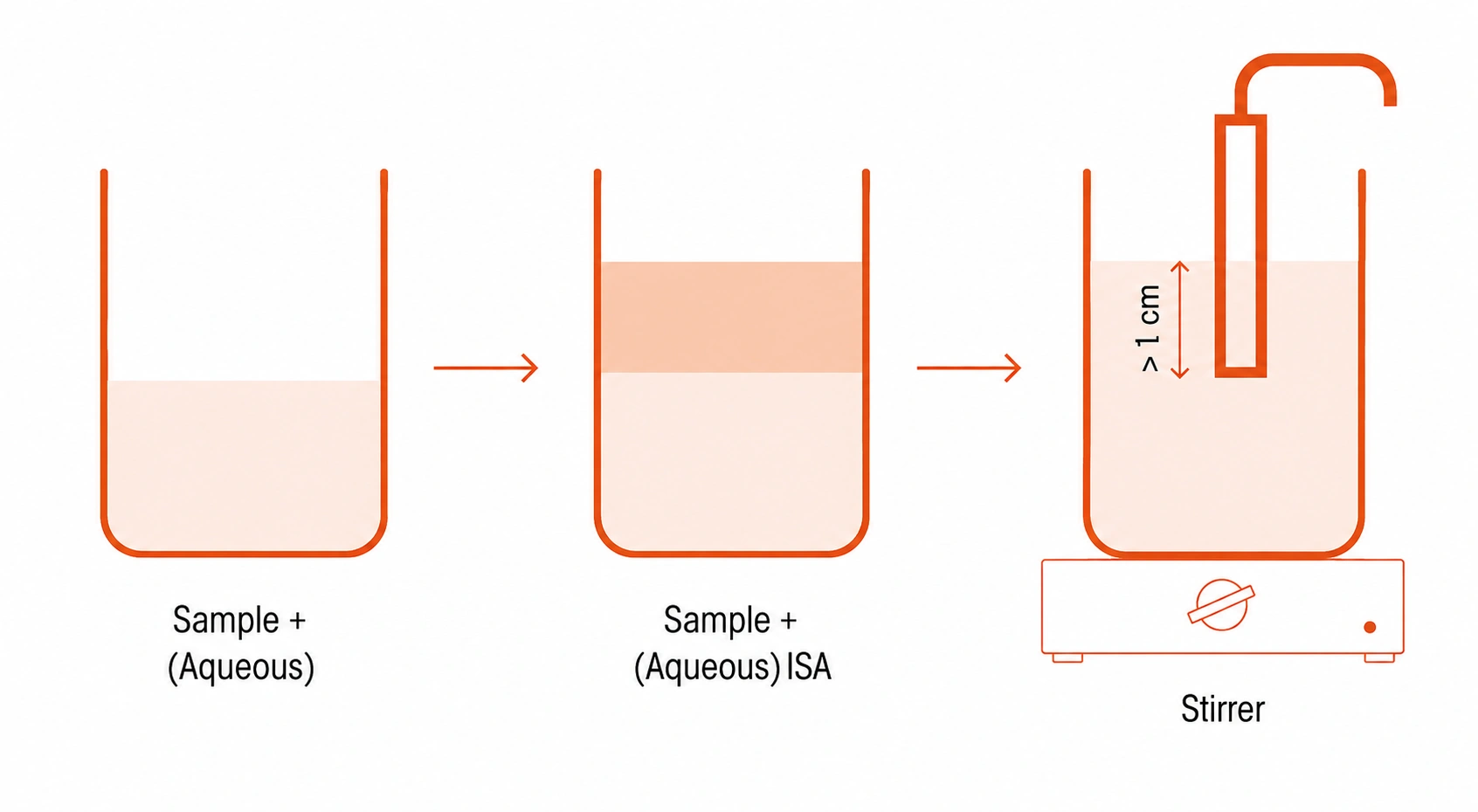
- Take a defined volume of each sample.
- Add the appropriate amount of ISA / standard solution to all samples.
- Maintain the same temperature and stirring conditions used during calibration.
- Stir gently and consistently to avoid the formation of air bubbles.
- Immerse the electrode by at least 1 cm, ensuring that the junction remains completely immersed.
- Rinse the electrode with deionized water between measurements to prevent sample carryover.
- Blot dry using low-lint tissue. Do not wipe or rub the sensing element.
Reference Electrode
- Store the sensor, replacing the bridge electrolyte with the reference electrolyte.
- Rinse the electrode with distilled water, close SafeLock™ and replace the wetting cap filled with electrolyte or InLab storage solution.
Ion Selective Electrodes
- Refer to the respective Operating Instructions.
- Short-Term Storage
- Low-concentration standard solution.
- Long-Term Storage
- Store dry – drain the electrolyte chamber. Clean with DI water.
- ISEs with glass membranes – never store them dry.
Click an application icon to view the corresponding Ion Selective Electrodes details.